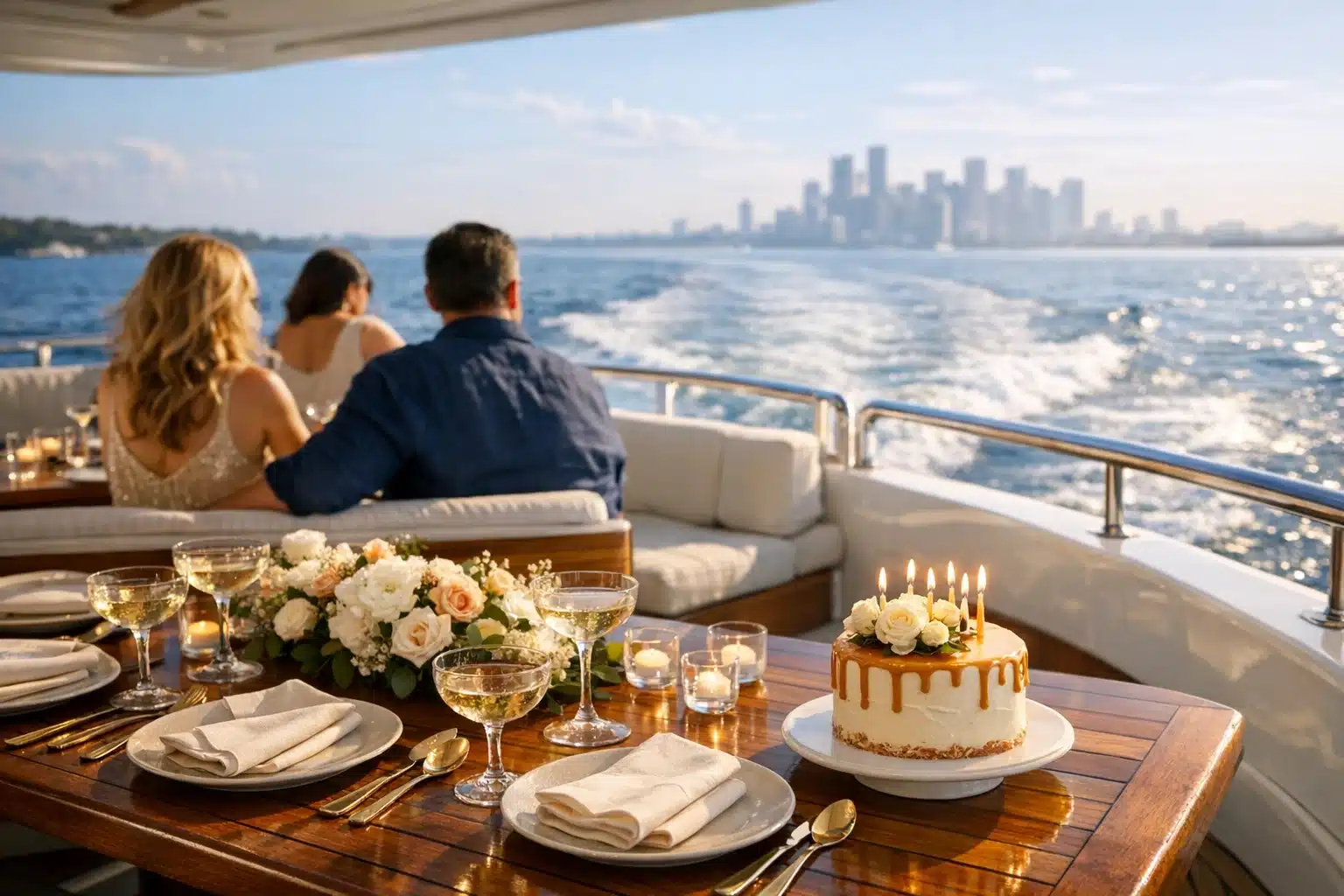
How to Host the Ultimate Birthday Yacht Charter: A Complete Guide
A birthday party on a yacht turns a familiar milestone into a moving setting where skyline views, sea air, and shared time do much of the hosting for you. Still, glamorous photos rarely show the choices behind the mood: picking a vessel that fits the group, balancing style with safety, timing the cruise around weather and light, and planning service that keeps guests comfortable from boarding to the final toast. That is why careful preparation matters.
Before diving into the details, here is a simple outline for planning the event well:
- Choose the right yacht, route, and charter style for your guest list.
- Build a birthday concept that matches the tone, timing, and activities.
- Understand pricing, contracts, marina access, and practical logistics.
- Plan food, drinks, music, décor, and memorable moments with intention.
- Finish with safety, etiquette, and a final checklist that protects the experience.
1. Choosing the Right Yacht, Route, and Rental Format
Host a legendary birthday on the water with our ultimate guide to private luxury yacht rentals.
The first and most important decision is not the cake, the playlist, or the dress code. It is the boat itself. A yacht sets the scale, comfort level, and rhythm of the entire celebration. When people browse listings, they often focus on glossy deck photos, yet the smarter approach is to start with function. Ask how many guests will attend, what kind of event you want to host, how long everyone will stay on board, and whether your group values sightseeing, dining, dancing, swimming, or simple relaxation. Those answers narrow the field quickly.
In broad terms, charter options usually fall into a few recognizable categories. Motor yachts often suit birthdays that prioritize speed, polished interiors, and a high-service atmosphere. Sailing yachts offer a quieter, more classic experience, with movement and scenery playing a larger role in the mood. Catamarans are popular for mixed-age groups because they typically provide better stability, generous deck space, and an easier flow between lounging and socializing. For larger informal groups in some destinations, premium party boats or luxury pontoons may also appear, though they create a very different experience from a crewed yacht charter.
Capacity rules matter more than hosts sometimes expect. A vessel may look spacious in photos but still feel crowded once catering tables, speakers, gift bags, and a photographer begin taking up room. Maritime regulations also set hard passenger limits that crews cannot ignore. In many markets, day charters for 10 to 12 guests are common, while larger event yachts can handle far more, usually at a much higher operating cost. Comfort is not just about the legal maximum; it is about whether people can move freely, sit without rotating in shifts, and find shade when the sun gets strong.
As you compare options, look beyond the headline rate and review practical details such as:
- Number of restrooms and cabins available to guests
- Shaded seating versus fully open deck space
- Boarding ease for children, older relatives, or guests in heels
- Included crew, fuel policy, and cruising area
- Sound system quality and rules around outside vendors
Route planning deserves equal attention. A harbor cruise with skyline views creates one mood, while a coastal run with swim stops creates another. Sunset charters often deliver the strongest visual payoff, but midday trips can be better for water activities and photography with clear light. The best yacht is not always the largest or most expensive one. It is the one that supports the type of birthday you actually want to host, without forcing the guest experience to adapt to a poor fit.
2. Shaping the Birthday Concept and the Flow of the Event
Once the vessel is chosen, the next step is designing the experience so the celebration feels intentional rather than improvised. A yacht party works best when the host can describe it in one sentence: elegant sunset dinner, upbeat daytime swim party, relaxed family brunch cruise, or milestone evening with cocktails and live music. That short description becomes the planning filter for every other choice. If the concept is fuzzy, invitations become vague, guest expectations split in different directions, and the event loses momentum before anyone steps aboard.
Guest experience begins long before departure. Invitations should answer the practical questions that people are often too shy to ask: what time to arrive, what shoes make sense on deck, whether jackets may be useful after sunset, if motion sickness remedies are a good idea, and whether guests should bring swimwear or leave it at home. Simple clarity reduces last-minute confusion and helps people show up relaxed. If your party includes a surprise element, you can still give logistical details without revealing the full plan.
A strong flow usually includes three phases. The first is arrival and settling in, when people are boarding, greeting each other, and orienting themselves to the boat. This is the right moment for a welcome drink, light music, and easy snacks that do not require a seat. The second phase is the core celebration, which may include a scenic cruise, meal service, speeches, a swim stop, or a photo session during golden hour. The third phase is the close, when energy shifts from peak excitement to an easy landing, often with dessert, a final toast, or a scenic return past city lights.
Timing is one of the quiet secrets of a successful charter. Guests tend to remember transitions as much as main attractions. If everything important is packed into the first hour, the rest can feel flat. If the highlight comes too late, people may be tired or distracted by docking. A balanced run sheet prevents that problem. For example:
- Boarding and welcome drinks: 20 to 30 minutes
- Scenic cruise and mingling: 45 to 60 minutes
- Meal or main activity: 60 to 90 minutes
- Cake, toast, and photos: 20 to 30 minutes
- Relaxed return with music: final 30 to 45 minutes
You do not need a heavy theme to make the event memorable. Sometimes one consistent visual direction does the job better than a complicated concept. Think white-and-gold linens, a citrus color palette for a summer birthday, or a black-and-champagne evening with soft lighting and understated florals. On the water, restraint often looks more luxurious than clutter. The setting already supplies drama: wind in the hair, reflections off the hull, and a horizon that keeps changing as conversation unfolds.
3. Budgeting, Contracts, and Marina Logistics Without Surprises
Luxury on the water can feel spontaneous, but the numbers behind it are rarely simple. One reason some birthday charters disappoint is not the boat or the crew; it is the host learning too late that the advertised rental fee was only the starting point. A disciplined budget protects both the experience and your peace of mind. Instead of asking only, “What does the yacht cost?” ask, “What will the complete event cost from boarding to the final invoice?” That broader question leads to better decisions.
In many charter markets, pricing depends on season, destination, vessel size, route, and crew level. A weekday afternoon can cost noticeably less than a Saturday sunset. Peak holiday periods tend to command the highest rates, while shoulder seasons may offer more flexibility and better negotiating room. Beyond the base charter fee, expenses often include fuel, food and beverages, port fees, event décor, service staff, gratuity, photography, entertainment, and overtime if the party runs longer than planned. A host who sets aside a contingency fund of roughly 10 to 15 percent is usually better prepared for additions that emerge during planning.
When reviewing quotes, ask for a breakdown in writing. Helpful budget lines often include:
- Base charter rate and trip duration
- Fuel included or billed separately
- Crew fees and suggested gratuity norms
- Catering packages, beverage options, and corkage
- Docking, marina access, or pickup location charges
- Cleaning fees, overtime rates, and damage deposits
Contracts deserve slow reading, especially the cancellation and weather clauses. A birthday is tied to a specific date, so flexibility matters. Some operators allow rescheduling when unsafe weather prevents departure, while others define conditions more narrowly. Light rain may not qualify for cancellation, but high winds often do. It is also wise to confirm guest count deadlines, music restrictions, decoration policies, and any limitations on outside vendors. A planner or charter broker can help interpret terms, yet hosts should still understand what they are signing.
Logistics on land shape the guest impression just as much as details on board. Consider parking, ride-share access, marina signage, check-in time, and how guests will locate the correct vessel without confusion. If your group includes children, elderly relatives, or travelers coming directly from a hotel or airport, add buffer time. Seasickness planning is another quiet advantage. Having water, light snacks, and motion remedies available is not glamorous, but it is deeply appreciated. The goal is simple: remove friction. When the transfer from street to dock to deck feels seamless, the celebration begins before the yacht even leaves the marina.
4. Food, Drinks, Music, and Atmosphere That Fit Life on the Water
Food and entertainment can elevate a yacht birthday or overwhelm it. The most effective plans respect the environment instead of fighting it. Boats move, wind changes quickly, surfaces are limited, and guests often prefer to mingle rather than sit in one place for long stretches. That is why menus designed for a ballroom do not automatically work on deck. The best onboard dining feels easy to enjoy while standing, talking, and taking in the view.
For daytime charters, lighter menus usually perform well: fresh fruit, small sandwiches, grilled seafood, seasonal salads, chilled pasta, and bite-sized desserts. Evening celebrations can handle a more structured service, but even then, practical elegance tends to beat formality. Passed canapés, tasting plates, or a refined buffet often create a smoother flow than a long plated dinner unless the yacht has a clear dining setup and professional event staffing. Cakes deserve special thought too. Tall, fragile designs may look impressive onshore, yet a compact cake with stable decoration usually travels better and cuts more easily in motion.
Drinks need the same strategic thinking. A full open bar sounds generous, but a curated beverage menu is often more efficient and safer. Signature cocktails, chilled wine, sparkling water, and a few nonalcoholic options can cover most preferences without slowing service. Hydration matters more than guests expect under sun and salt air. Many experienced hosts quietly build refreshment stations into the party plan because fatigue can arrive faster on the water than in a traditional venue.
Atmosphere comes from layers, not just one big feature. Consider combining:
- A playlist that changes with the pace of the cruise
- Florals or table accents secured for wind and motion
- Soft blankets or wraps for evening charters
- A photographer timed to capture boarding, golden hour, and cake moments
- One focal feature such as a custom sign, lounge setup, or dessert display
Live entertainment can be memorable, but scale matters. A DJ, acoustic duo, or saxophonist may work beautifully on some yachts and feel cramped on others. Confirm space needs, sound limitations, and power requirements before booking. Some marinas and operators enforce noise rules, especially near docking areas or residential waterfronts. The same principle applies to décor. Open flames, heavy structures, and loose balloons are often restricted for safety or environmental reasons.
When done well, the onboard atmosphere feels cinematic without trying too hard. Glasses catch the late sun, music travels lightly over the water, and even simple food seems elevated by the setting. Guests rarely remember every menu item. They remember how naturally the evening unfolded, and whether every element seemed to belong there.
5. Conclusion: Safety, Etiquette, and the Final Checklist for a Birthday Worth Remembering
The most stylish yacht party is still a maritime event, which means safety cannot be treated as a background detail. Good hosts do not bring safety into the plan to make the party feel strict; they do it to protect the relaxed mood everyone came for. Guests should know where to board, where not to stand during docking, how to move carefully between decks, and who to ask before entering restricted areas. A short crew briefing at the beginning sets the tone without taking away from the celebration. It also gives guests confidence, especially those who do not spend much time on boats.
Etiquette matters too. Crew members are there to provide service and maintain the vessel, but they are also managing navigation, timing, and onboard rules. Clear communication, reasonable requests, and respect for their instructions make the experience smoother for everyone. The same goes for guests. Encourage practical footwear, remind people not to overpack, and gently discourage behavior that turns lively fun into risk. If children are attending, assign specific adults to supervise rather than assuming the group will sort itself out naturally.
A smart final checklist can keep the last week from becoming chaotic. Before departure, confirm:
- Final guest count and boarding list
- Route, timing, and weather backup plan
- Catering quantities and dietary needs
- Music setup, décor delivery, and photography schedule
- Payment deadlines, gratuity method, and emergency contact details
On the day itself, arrive early, carry essentials in a small bag, and let one person besides the host handle coordination on shore. That small support role is surprisingly valuable when guests start calling from ride-shares, the cake arrives at the dock, and the crew needs one last decision about timing. Hosts who try to manage everything personally often miss the opening stretch of their own celebration.
For readers planning a yacht birthday, the main lesson is simple: the ultimate event is rarely the one with the most excess. It is the one with the clearest fit between boat, budget, guest list, and atmosphere. If you choose a vessel that suits your group, shape a realistic schedule, read the charter terms carefully, and plan the onboard details with the water in mind, the result feels effortless in the best way. A birthday at sea should not be memorable because something nearly went wrong. It should stay with people because the whole experience felt smooth, thoughtful, and genuinely joyful from the first step aboard to the final return to shore.